Industrial Automation Controller
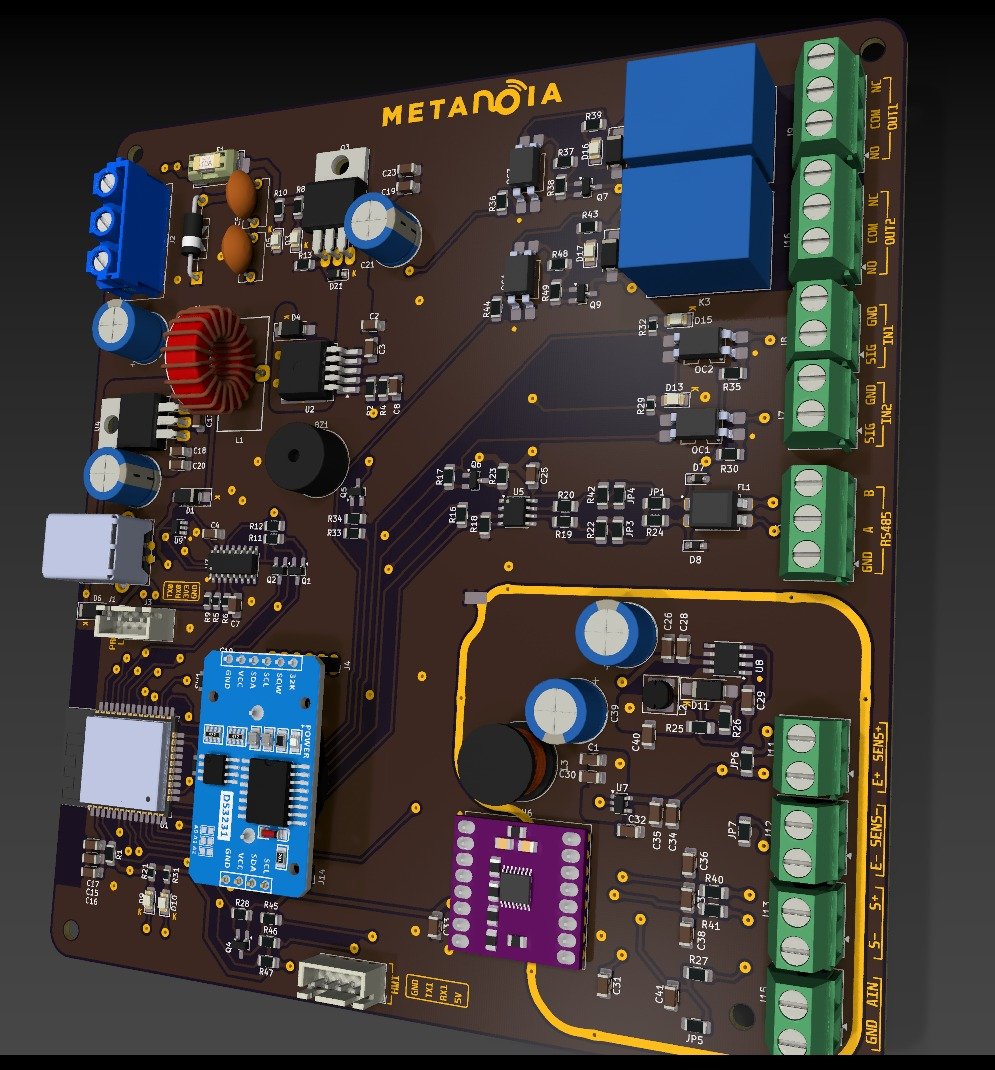
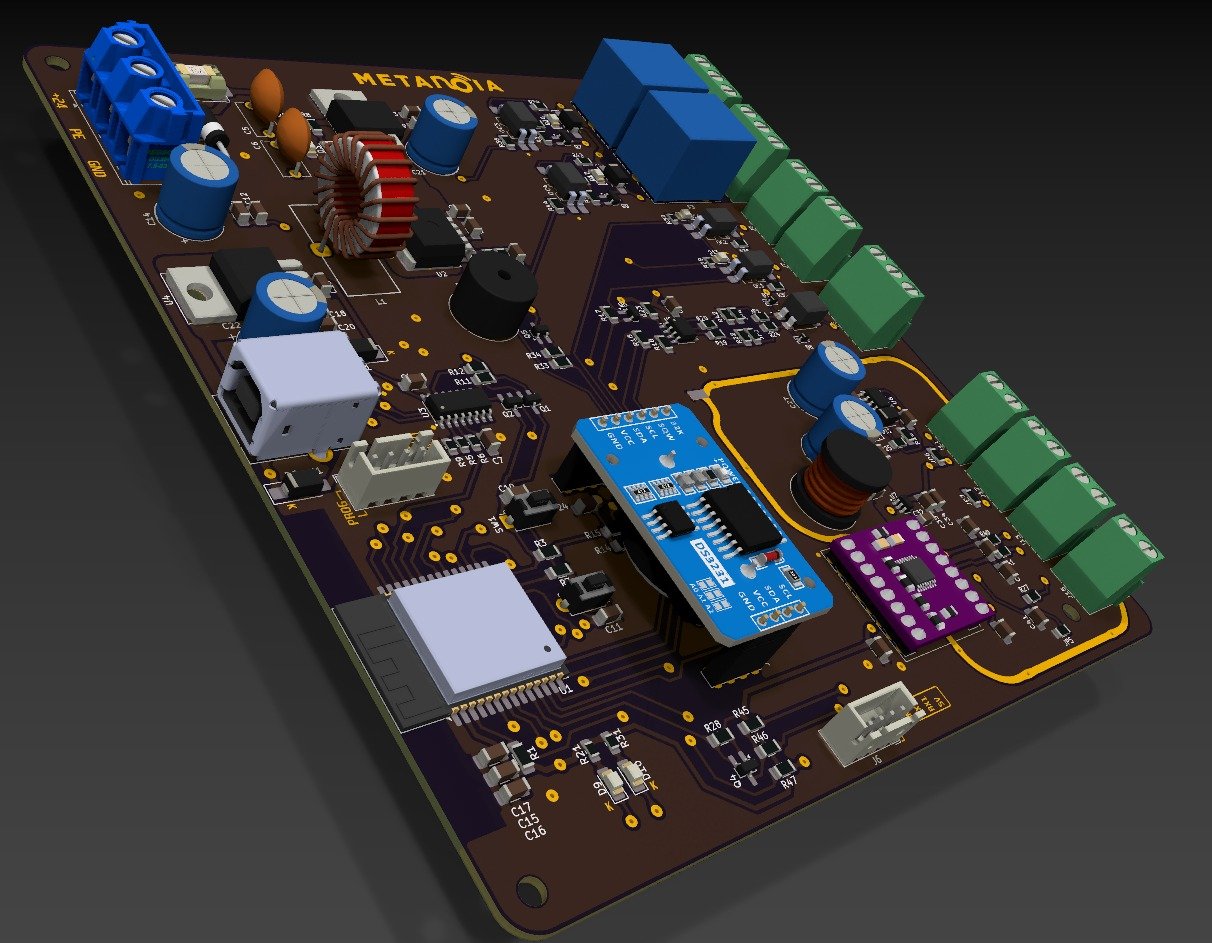
A custom industrial controller for machine automation, sensor monitoring, motor control, and reliable communication with HMI and external industrial systems.
Client Requirements
The client needed a custom controller capable of:
- Controlling different machine functions from one central board.
- Receiving signals from industrial sensors and switches.
- Operating motors, contactors, solenoids, and relays.
- Communicating with an HMI or external control system.
- Supporting industrial communication protocols.
- Detecting faults and unsafe operating conditions.
- Providing stable operation during continuous machine use.
- Allowing future hardware and firmware upgrades.
Our Solution
Metanoia designed and developed a complete industrial control solution including:
- Custom controller architecture.
- Electronic schematic design.
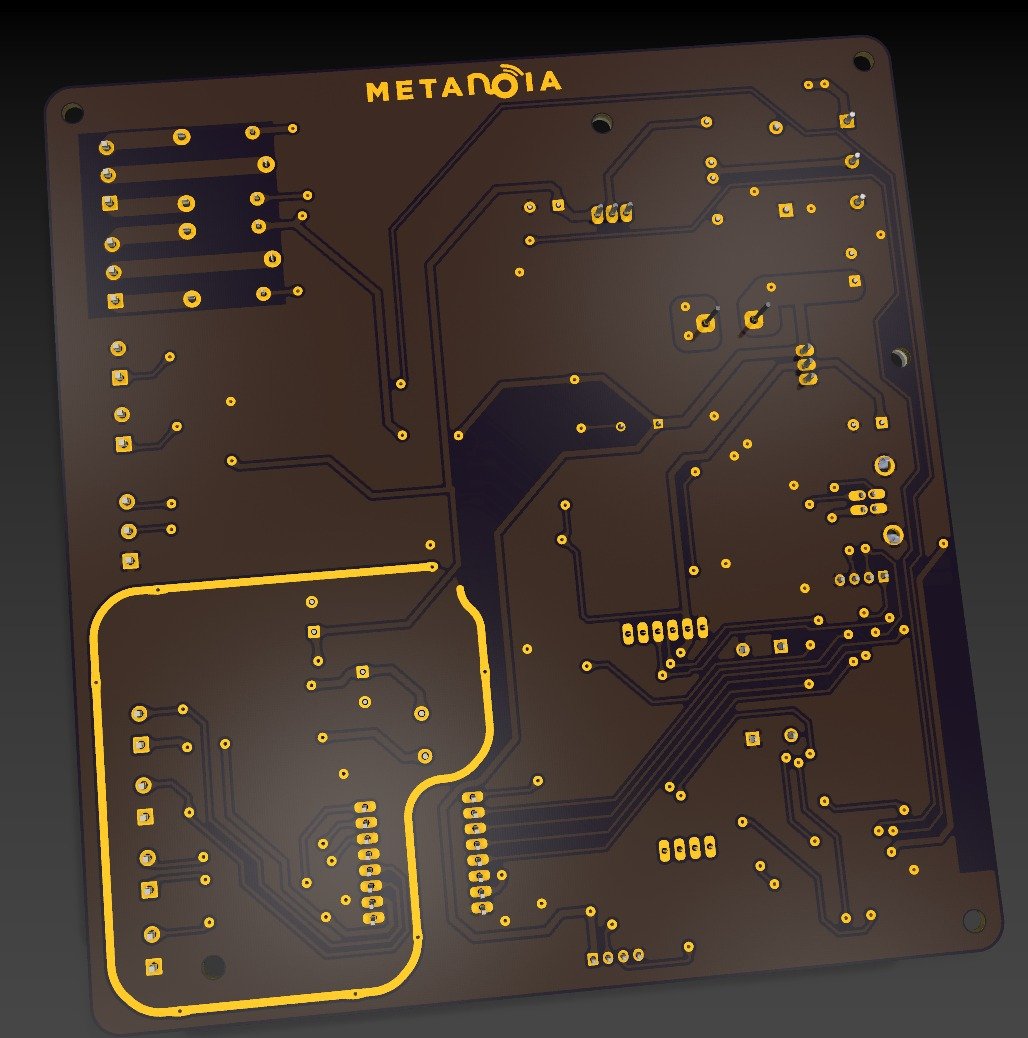
- PCB layout and manufacturing.
- Microcontroller-based control system.
- Digital and analog input interfaces.
- Relay and motor-control outputs.
- RS485 industrial communication.
- Modbus communication support.
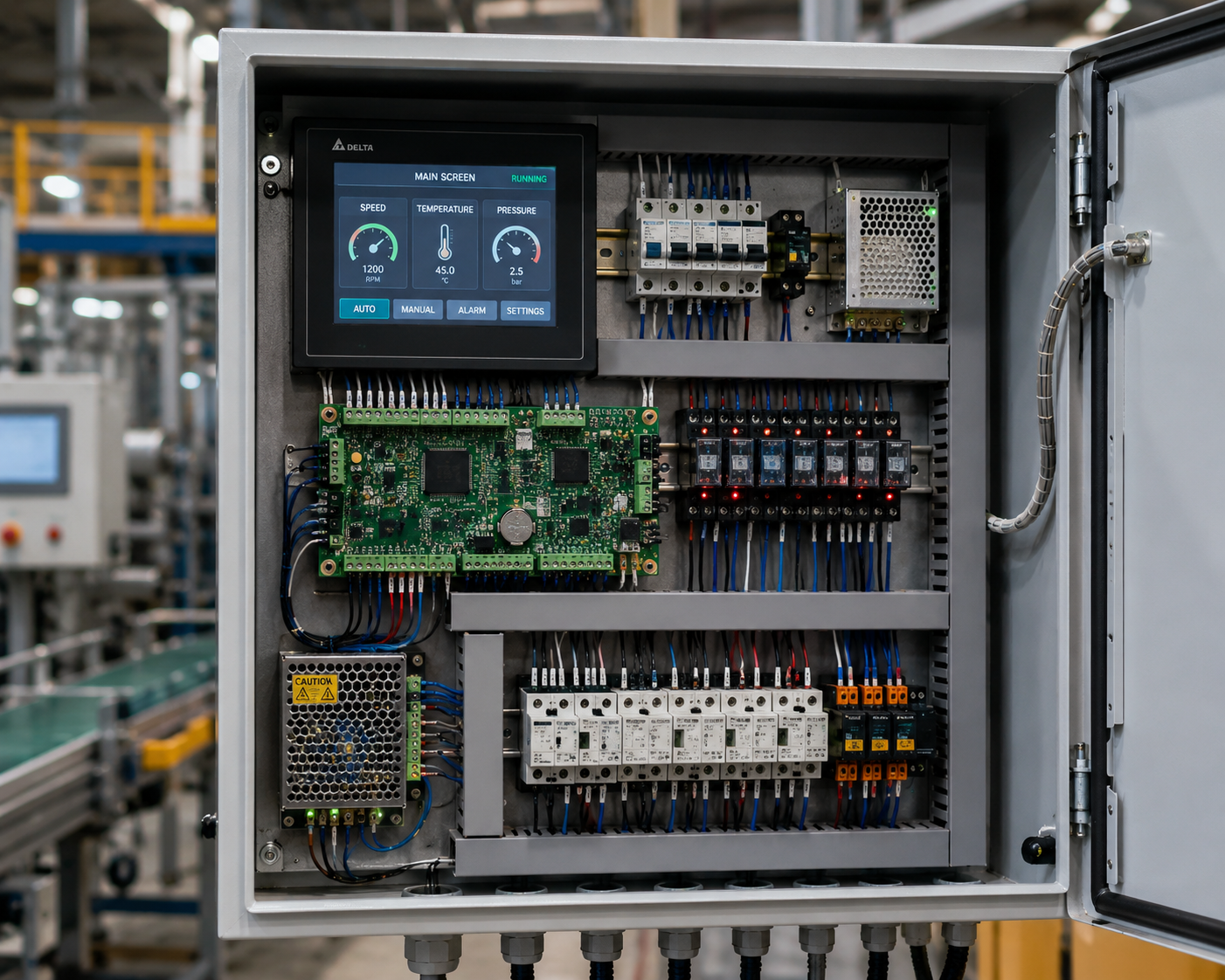
- HMI integration.
- Protection and safety circuits.
- Firmware development.
- Assembly, soldering, and testing.
The system was designed as a modular platform that can be adapted to different industrial machines and automation applications.
Main Features
Central Machine Control
The controller manages the main machine operations from one centralized electronic system.
Sensor Monitoring
It receives real-time signals from sensors such as:
- Proximity sensors.
- Limit switches.
- Temperature sensors.
- Pressure sensors.
- Level sensors.
- Safety switches.
Motor and Relay Control
The board can control:
- DC motors.
- Motor drivers.
- Contactors.
- Solenoid valves.
- Relays.
- Pumps.
- Industrial actuators.
HMI Integration
The operator can monitor and control the machine through an HMI interface displaying:
- Machine status.
- Sensor readings.
- Operating modes.
- Error messages.
- Manual controls.
- Production information.
Industrial Communication
RS485 and Modbus communication allow the controller to exchange data with:
- HMI screens.
- PLC systems.
- External controllers.
- Monitoring systems.
- Industrial computers.
Safety and Protection
The system includes protection against:
- Reverse polarity.
- Voltage fluctuations.
- Electrical noise.
- Output overload.
- Unsafe operating conditions.
Engineering Challenges
Industrial Electrical Noise
Industrial machines can generate electrical noise that affects control signals and communication.
The PCB layout and input circuits were designed to improve signal stability and reduce interference.
Multiple Input and Output Types
The controller needed to support different sensors, relays, motors, and machine devices.
A flexible input and output architecture was developed to support different industrial applications.
Reliable Communication
Stable communication between the controller and HMI was essential.
RS485 and Modbus were implemented to provide reliable communication over longer distances and in noisy industrial environments.
Continuous Operation
The system needed to operate continuously without freezing or losing control.
Firmware protection, watchdog monitoring, and fault-handling routines were included to improve system reliability.
Development Process
1. Requirements Analysis
The machine functions, input signals, outputs, safety conditions, and communication requirements were studied.
2. System Architecture
The controller architecture, power sections, communication interfaces, and control circuits were defined.
3. Schematic Design
The complete electronic schematic was designed, including the microcontroller, inputs, outputs, communication, and protection circuits.
4. PCB Design
The PCB was designed with attention to:
- Signal separation.
- Power routing.
- Noise reduction.
- Current capacity.
- Connector placement.
- Maintenance accessibility.
5. PCB Manufacturing and Assembly
The board was manufactured, assembled, and soldered locally by Metanoia.
6. Firmware Development
The firmware was developed to manage machine logic, communication, safety conditions, and fault detection.
7. Testing and Validation
The controller was tested with simulated and real machine signals before final installation.
Project Results
The final system provided:
- Centralized machine control.
- Reliable sensor monitoring.
- Stable motor and relay operation.
- Real-time HMI monitoring.
- Industrial communication support.
- Improved machine safety.
- Easier maintenance and troubleshooting.
- A flexible platform for future upgrades.