Smart Interval Training Timer
A compact battery-powered interval timer designed for fitness, boxing, HIIT, CrossFit, and professional training with customizable workout modes and up to three months of battery life.
Project Overview
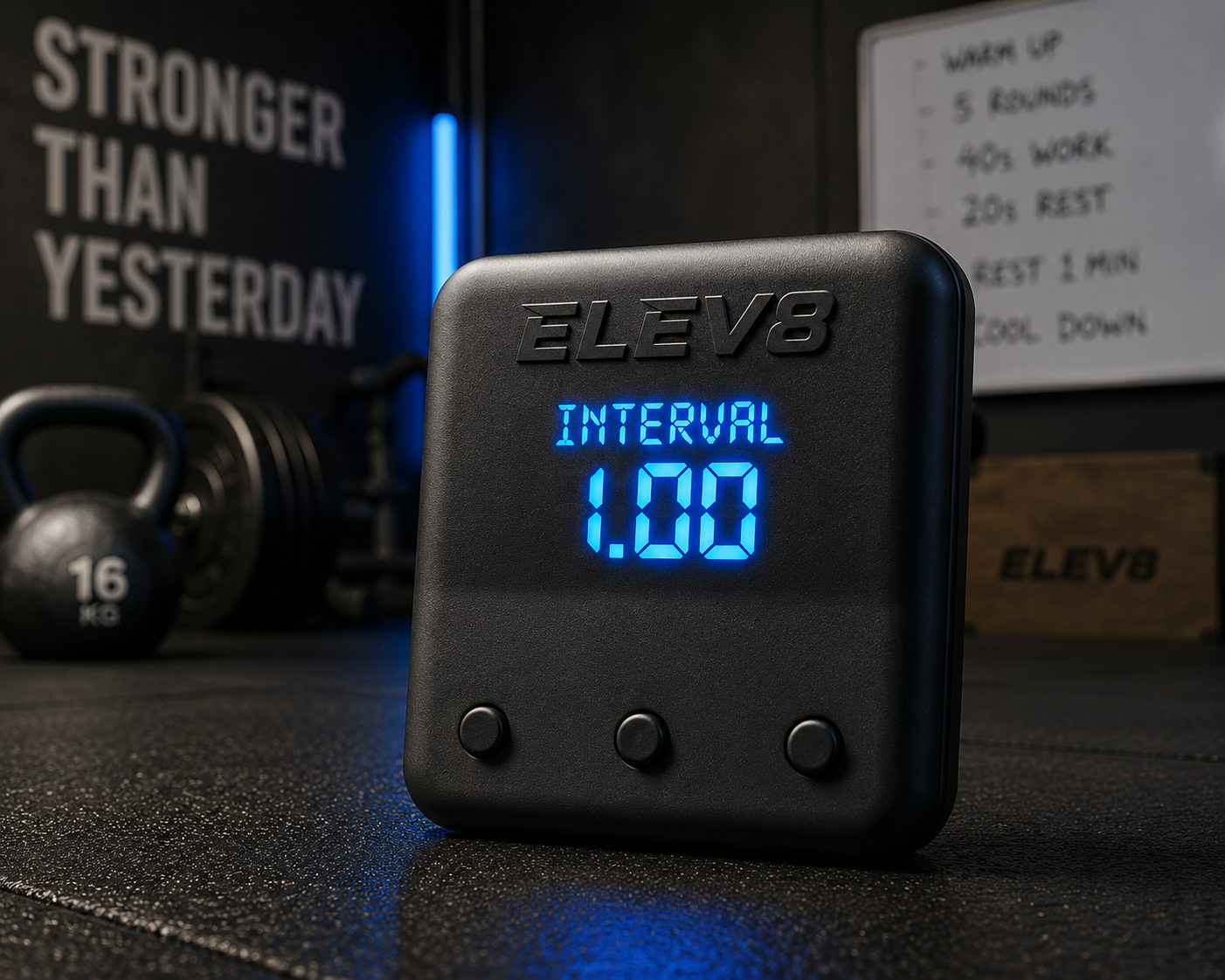
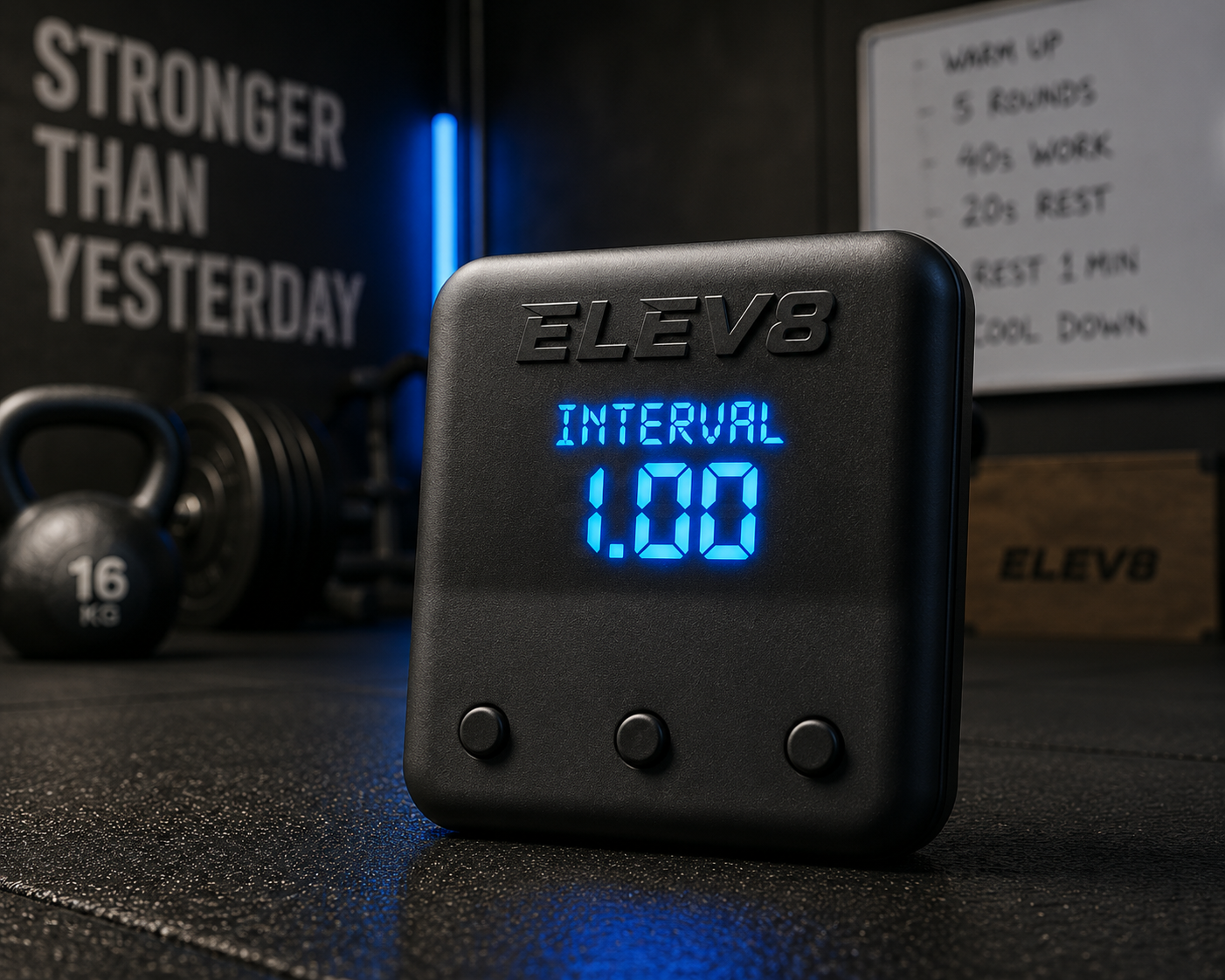
The Smart Interval Training Timer was developed as a compact consumer electronic device that helps athletes, coaches, and fitness enthusiasts manage interval-based workouts with precision and ease.
Designed for daily use, the timer allows users to configure custom work and rest intervals, multiple rounds, and different training routines through a simple three-button interface and a bright, easy-to-read display.
Its ultra-low-power embedded design enables the device to operate for approximately three months using a single replaceable battery, making it a reliable and maintenance-friendly solution for home gyms, fitness centers, and professional training environments.
Client Requirements
The client required a compact and reliable interval timer capable of:
- Configurable work and rest intervals.
- Multiple workout presets.
- Bright, easy-to-read display.
- Simple three-button operation.
- Audio notifications between intervals.
- Long battery life.
- Replaceable battery.
- Fast startup.
- Reliable daily operation.
- Compact and modern product design.
- Low maintenance.
Our Solution
Metanoia designed and developed a complete embedded consumer product including:
- Electronic system architecture.
- Custom PCB design.
- Embedded firmware development.
- Display interface.
- User input system.
- Low-power electronics.
- Audio notification system.
- Battery-powered operation.
- Product integration.
- Functional testing.
- Manufacturing preparation.
The final product delivers a simple yet powerful interval timer optimized for portability, reliability, and long operating life.
Main Features
Custom Workout Programming
Users can configure:
- Work duration.
- Rest duration.
- Number of rounds.
- Warm-up time.
- Cool-down time.
Multiple Training Modes
Suitable for:
- HIIT
- Tabata
- Boxing
- Circuit Training
- CrossFit
- Functional Training
- Rehabilitation Exercises
High Visibility Display
The bright display clearly presents:
- Remaining time.
- Current interval.
- Workout status.
- Active mode.
Simple User Interface
The three-button interface allows quick access to:
- Start
- Pause
- Reset
- Menu
- Presets
- Workout configuration
Audio Notifications
Built-in sound alerts notify users of:
- Interval changes.
- Round transitions.
- Workout completion.
- Timer start.
Long Battery Life
The timer operates using a replaceable battery that provides approximately three months of normal operation before replacement, minimizing maintenance while ensuring dependable daily use.
Ultra-Low Power Design
Both hardware and firmware were optimized to reduce power consumption while maintaining responsive performance and long battery life.
Engineering Challenges
Power Optimization
Achieving approximately three months of battery life required careful hardware selection and efficient firmware optimized for ultra-low-power operation.
User Experience
The entire device had to remain easy to operate using only three physical buttons without sacrificing functionality.
Display Readability
The display was optimized to remain clearly visible during indoor training sessions under various lighting conditions.
Compact Product Design
The PCB, display, battery, and enclosure were carefully integrated into a compact and durable handheld product.
Reliable Timing
Accurate embedded timing was essential to ensure consistent interval transitions for professional fitness training.
Development Process
1. Product Planning
Training scenarios and user interaction were analyzed to define the device requirements.
2. Hardware Design
The electronic system was designed around an embedded microcontroller, display, user buttons, buzzer, and ultra-low-power circuitry.
3. PCB Design
A compact custom PCB was developed to maximize reliability while minimizing size and power consumption.
4. Firmware Development
Embedded software was developed to manage:
- Workout logic.
- Timing engine.
- User interface.
- Display control.
- Audio notifications.
- Power management.
5. Prototype Assembly
The prototype was assembled, programmed, and integrated into the final enclosure.
6. Testing and Validation
The device underwent functional, endurance, usability, and battery-life testing to ensure reliable long-term operation.