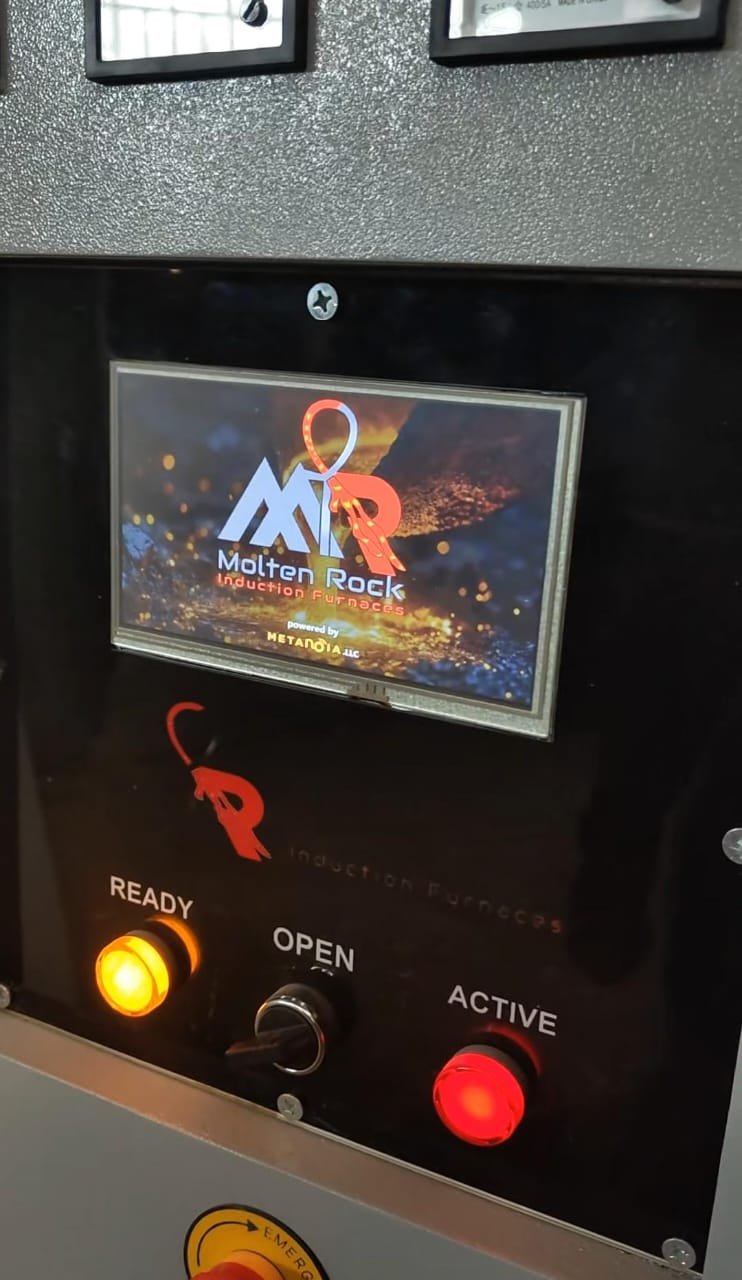
300 kW Induction Control System
A high-performance embedded control system for industrial induction furnaces up to 300 kW, featuring real-time power monitoring, intelligent protection, touchscreen HMI, cooling supervision, and advanced industrial automation.
Project Overview
The 300 kW Smart Induction Furnace Control System was developed as a complete embedded automation platform for high-power induction heating applications.
Designed for industrial metal melting and heat treatment processes, the system combines custom electronics, embedded firmware, touchscreen HMI, real-time monitoring, and multiple safety mechanisms into a reliable industrial control solution.
The controller continuously supervises machine operation, monitors electrical parameters, cooling performance, and protection conditions while providing operators with an intuitive graphical interface for machine control.
Client Requirements
The client required a control platform capable of:
- Controlling an induction furnace up to 300 kW.
- Providing a modern touchscreen HMI.
- Monitoring voltage, current, and output power.
- Supervising the cooling system.
- Detecting coil availability.
- Monitoring semiconductor temperature.
- Supporting emergency shutdown.
- Providing fault diagnostics.
- Operating reliably in harsh industrial environments.
- Protecting high-power electronic components.
- Simplifying operation and maintenance.
Our Solution
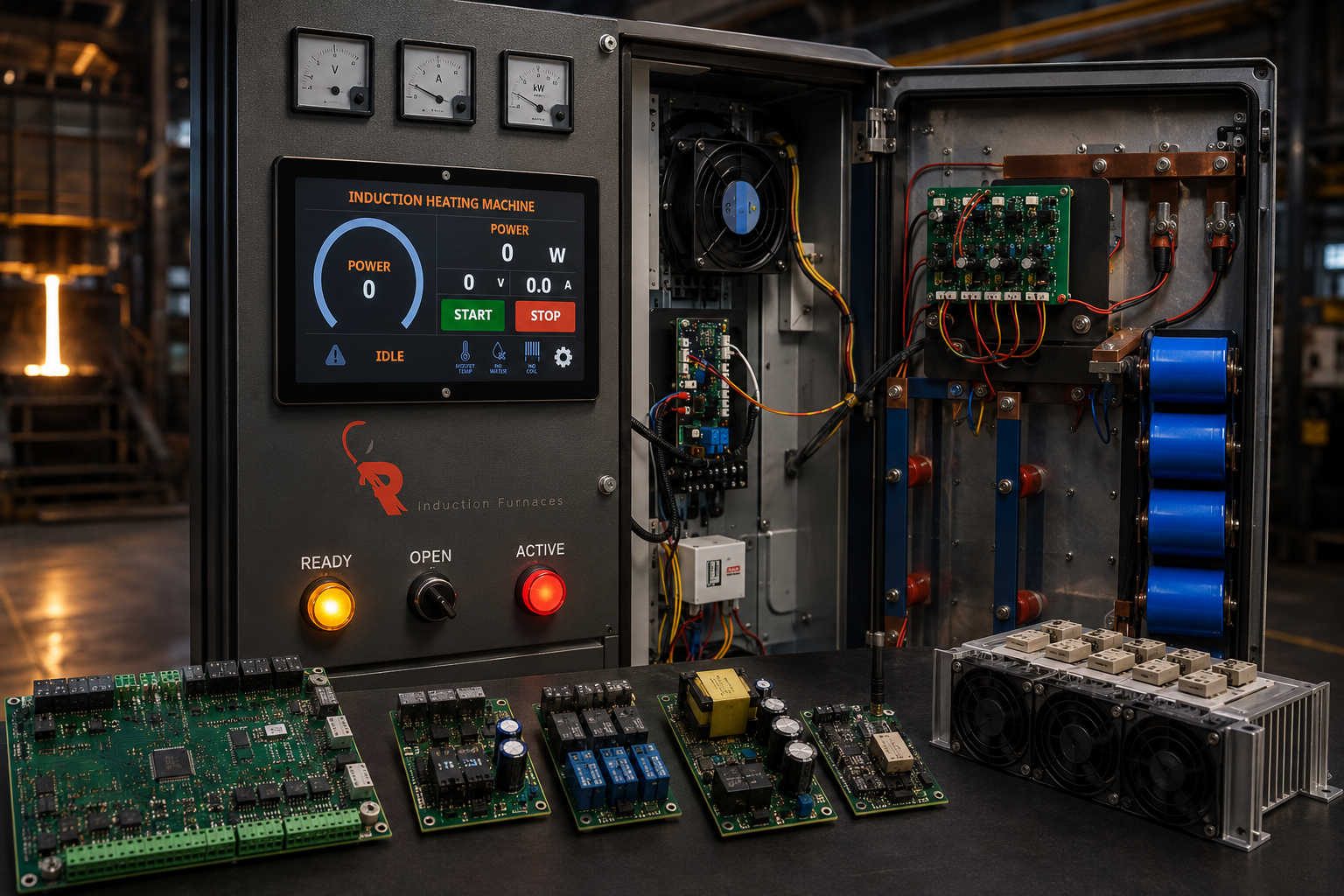
Metanoia designed and developed a complete industrial embedded control platform including:
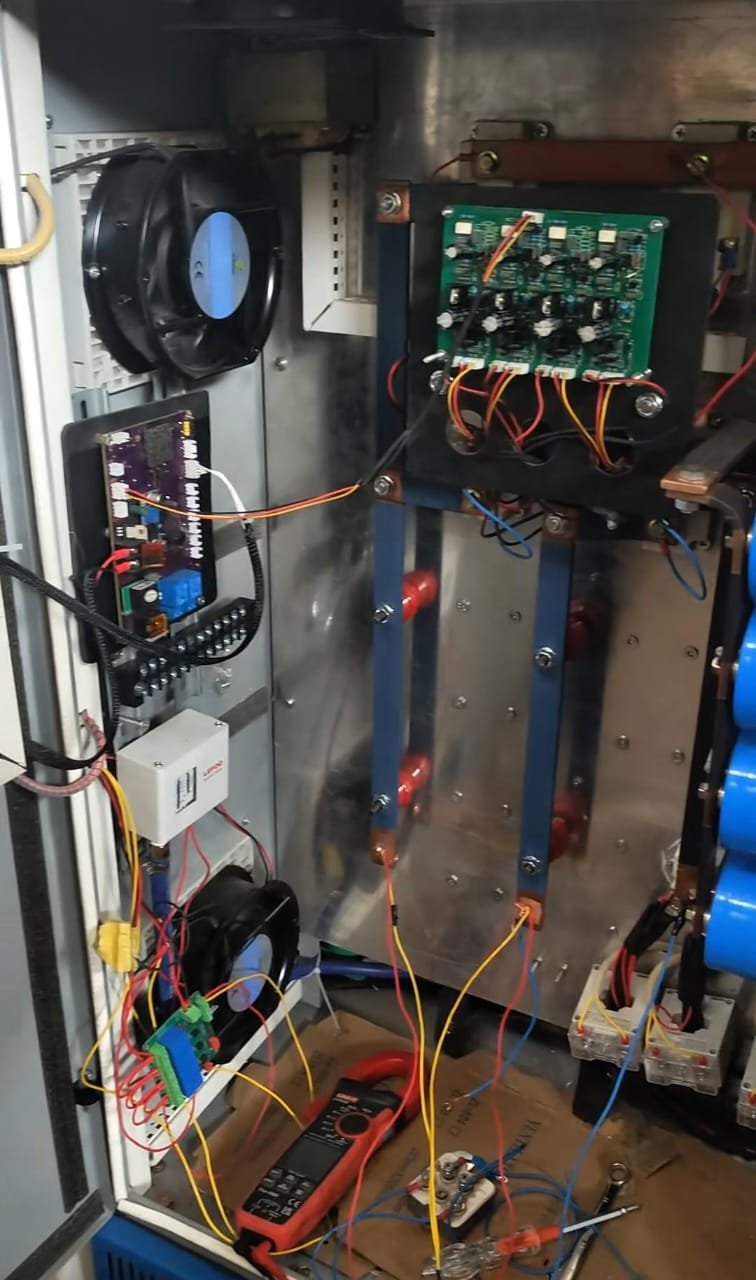
- Custom Main Control PCB.
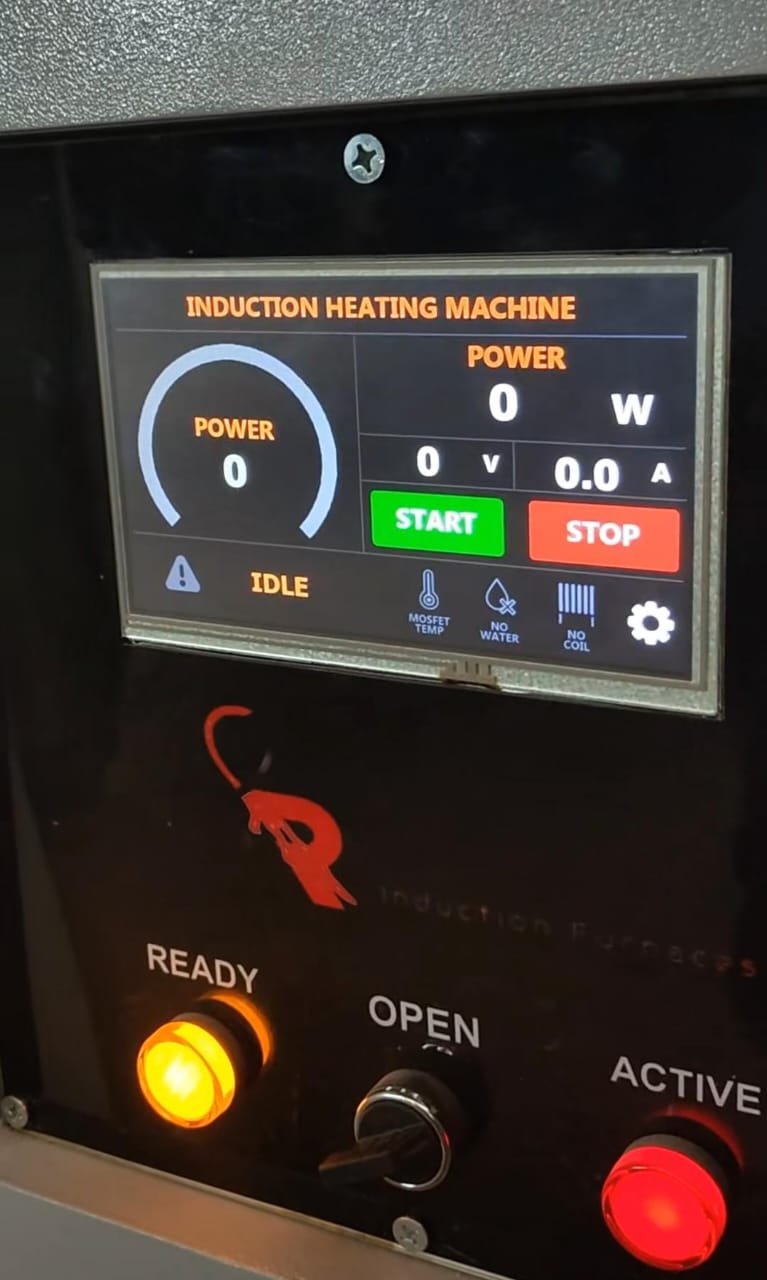
- Touchscreen Human Machine Interface.
- Real-time Power Monitoring.
- Cooling System Supervision.
- Temperature Monitoring.
- Protection Algorithms.
- Embedded Firmware.
- Industrial Communication Interfaces.
- Functional Testing.
- Manufacturing-ready electronics.
The system provides centralized machine management while maintaining safe operation under demanding industrial conditions.
Main Features
Industrial Touchscreen HMI
The graphical interface allows operators to:
- Start and stop the furnace.
- Monitor operating power.
- View voltage and current.
- Monitor machine status.
- Display alarms.
- Access configuration settings.
Real-Time Power Monitoring
The controller continuously measures:
- Output Power.
- Supply Voltage.
- Current Consumption.
- Operating Status.
Intelligent Protection System
The embedded firmware continuously supervises:
- MOSFET Temperature.
- Cooling Water.
- Induction Coil Status.
- Emergency Conditions.
- Fault States.
Cooling System Monitoring
Reliable cooling supervision protects the power electronics from overheating and ensures continuous operation.
Industrial Safety
Multiple protection routines automatically prevent unsafe operating conditions and reduce the risk of equipment damage.
High Reliability
Designed for continuous industrial operation with robust hardware and embedded software.
Engineering Challenges
High-Power Environment
Operating near a 300 kW induction system required careful consideration of electrical noise, thermal management, and hardware protection.
Reliable Protection Logic
Protection algorithms had to react immediately to abnormal conditions while avoiding unnecessary machine interruptions.
Accurate Power Measurement
Real-time monitoring of voltage, current, and output power required stable measurement circuitry and optimized firmware.
Industrial User Experience
The touchscreen interface was designed to provide clear operational information while remaining simple to use in industrial environments.
Development Process
1. Industrial Requirements Analysis
Machine operation, power stage, cooling system, and protection requirements were analyzed.
2. Hardware Design
Custom industrial electronics were developed for sensing, monitoring, protection, and HMI integration.
3. PCB Design
Production-ready PCBs were optimized for industrial reliability and electromagnetic compatibility.
4. Embedded Firmware Development
Firmware manages:
- Machine control.
- Power monitoring.
- Cooling supervision.
- Temperature monitoring.
- Alarm handling.
- Protection logic.
- HMI communication.
5. HMI Development
A dedicated graphical interface was developed for machine operation, diagnostics, and monitoring.
6. Testing & Validation
The complete system underwent functional, safety, endurance, and industrial validation testing.